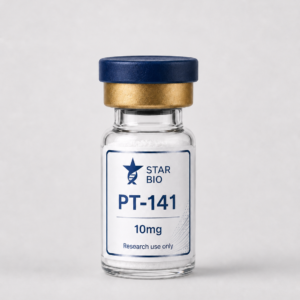
PT-141 has become an increasingly talked-about peptide in research circles, particularly in studies exploring arousal, desire, and motivation in both men and women. What makes PT-141 stand out is that it does not work through hormones or blood flow in the way many earlier compounds did. Instead, researchers quickly became interested in its effects on the brain itself.
PT-141 was originally developed during investigations into melanocortin receptor pathways, which are closely involved in motivation, reward, and behavioural response. Early research showed that the peptide interacts directly with receptors in the central nervous system, shifting attention away from physical mechanisms and towards neurological signalling. This discovery shaped much of the research that followed.
One of the most widely discussed areas of PT-141 research involves arousal and desire in mixed-gender and couple-based studies. In these controlled settings, both male and female participants were observed for changes in mental engagement, responsiveness, and interest. What stood out was that PT-141 appeared to influence desire at a psychological level rather than relying on hormonal changes.
For men, studies suggested increased mental arousal and responsiveness, with participants reporting stronger interest and engagement compared with baseline measurements. Researchers noted that these effects were not dependent on testosterone levels or vascular changes, reinforcing the idea that PT-141 works through central neural pathways. This made it a valuable compound for studying how motivation and arousal are initiated in the brain.
Research involving women generated even more interest. Female participants across various age groups reported noticeable increases in desire, quicker mental engagement, and heightened responsiveness to stimuli. These effects were particularly significant because they occurred without measurable changes in hormone levels. Scientists interpreted this as evidence that PT-141 may influence how the brain processes attraction, anticipation, and motivation rather than physical readiness alone.
Couple-based observations added another layer of interest. Researchers found that when desire increased in one partner, it often positively affected overall interaction within the couple. This made PT-141 especially relevant for studying shared arousal and relational dynamics, rather than focusing solely on individual responses.
Another key point from these studies was the timing of effects. Changes in mental arousal were often reported relatively quickly, supporting the theory that PT-141 interacts with fast-acting neural signalling systems. This rapid onset further distinguished it from compounds that depend on slower endocrine or circulatory processes.
Today, PT-141 remains a popular subject for researchers exploring sexual motivation, behavioural response, and the neurobiology of desire in both men and women. Its ability to influence central signalling pathways has positioned it as a useful research tool for understanding how arousal and interest are regulated in the brain.
In summary, PT-141 represents a shift in how researchers approach the study of desire. By focusing on neural pathways rather than physical systems, it offers valuable insight into arousal mechanisms for both men and women. As research continues, PT-141 remains a key peptide of interest for scientists studying motivation, behavioural signalling, and human connection at the neurological level.